The law, correctly
Missouri has no matching law for roofs
This is worth stating carefully because a great deal of nonsense circulates about it. Missouri has no matching statute and no matching regulation covering residential roofs. Some states have one. Missouri does not.
The regulation that gets cited in this argument, 20 CSR 100 series, is a Department of Commerce and Insurance rule about automobile body repair. It concerns cars. It has nothing to do with a roof, and a page that cites it at you about your shingles has either copied it from another state's content or has not read it.
What Missouri has instead is case law and the wording of your own policy. The case usually referred to is Alessi v. Mid-Century Insurance, 464 S.W.3d 529 (Mo. App. E.D. 2015), a Missouri Court of Appeals decision for the Eastern District. The practical answer for a homeowner is that whether a mismatch is covered turns on what your policy says, and the only way to know is to read the policy or ask the person who wrote it.
Not legal advice
This page explains where the rules sit so you can ask better questions. It is not legal advice and it is not a coverage opinion. Missouri law (RSMo 407.725) bars a roofing contractor from representing or negotiating on an owner's insurance claim, so Keys does not advise on coverage and will not do so.
The product problem
Why an exact match is often not available
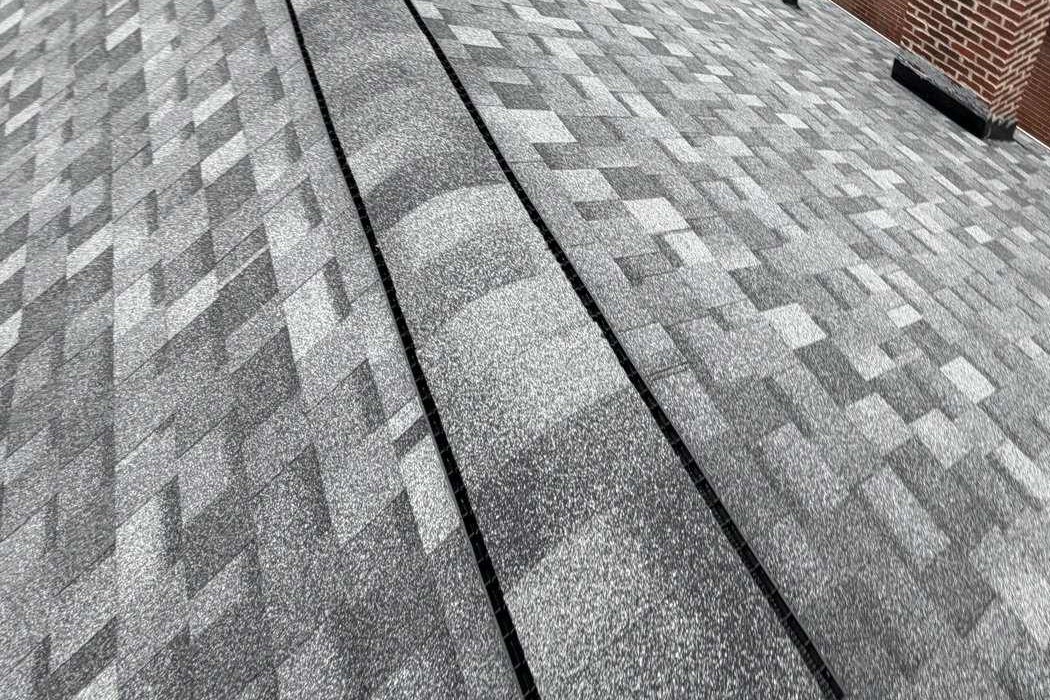
Shingle lines are discontinued, reformulated and recoloured on a manufacturer's schedule, not a homeowner's. A colour blend that was current when your roof went on may no longer be produced under that name, or may be produced with a different granule mix that reads differently in the same light. Three tab profiles have been steadily displaced by architectural profiles across the whole industry, so a three tab roof from an earlier decade may have no current equivalent at all in the same weight.
Even when a line is nominally still available, two things make a visible difference:
- Production variation. Granule blends vary between production runs. A bundle made this year and a bundle made a decade ago from the same line will not necessarily read as identical on a roof.
- Weathering. The existing roof has been in Missouri sun for years. It has lost some granule, it has faded, and it has picked up whatever the trees above it deposit. A brand new bundle of exactly the right product will still look new next to it.
That second one is the honest core of the matter. What people usually mean by matching is not "same product". It is "not visible from the driveway", and those are different requests.
The craft answer
Where you stop matters more than what you use
A good contractor's first move on a matching problem is not a search for the product. It is a decision about the boundary. A new section that stops at a natural break in the roof, a ridge, a valley, a hip, a plane that faces a different direction, will read as a different plane rather than as a patch, and the eye forgives it. A new section that stops in the middle of a long open slope will be visible from the street for the rest of its life, no matter how close the colour is.
The options, honestly stated, usually come down to four:
- Replace to the natural break. Costs more than the damaged area alone, and looks like a roof rather than a repair.
- Replace the whole plane. Where the damage is spread across a slope or the slope faces the street, this is often the only result anyone will actually be happy with.
- Blend with salvaged material. Where sound shingles can be taken from a hidden plane, a rear elevation or a garage, and used on the visible one, with new material going in the hidden spot. Slow, skilled, and sometimes the best answer on an older roof.
- Accept a near match and say so out loud. Legitimate, particularly on a rear or a low visibility plane, as long as the homeowner is shown a sample against the existing roof in daylight and agrees before the work happens.
The test
Ask to see it before it goes on
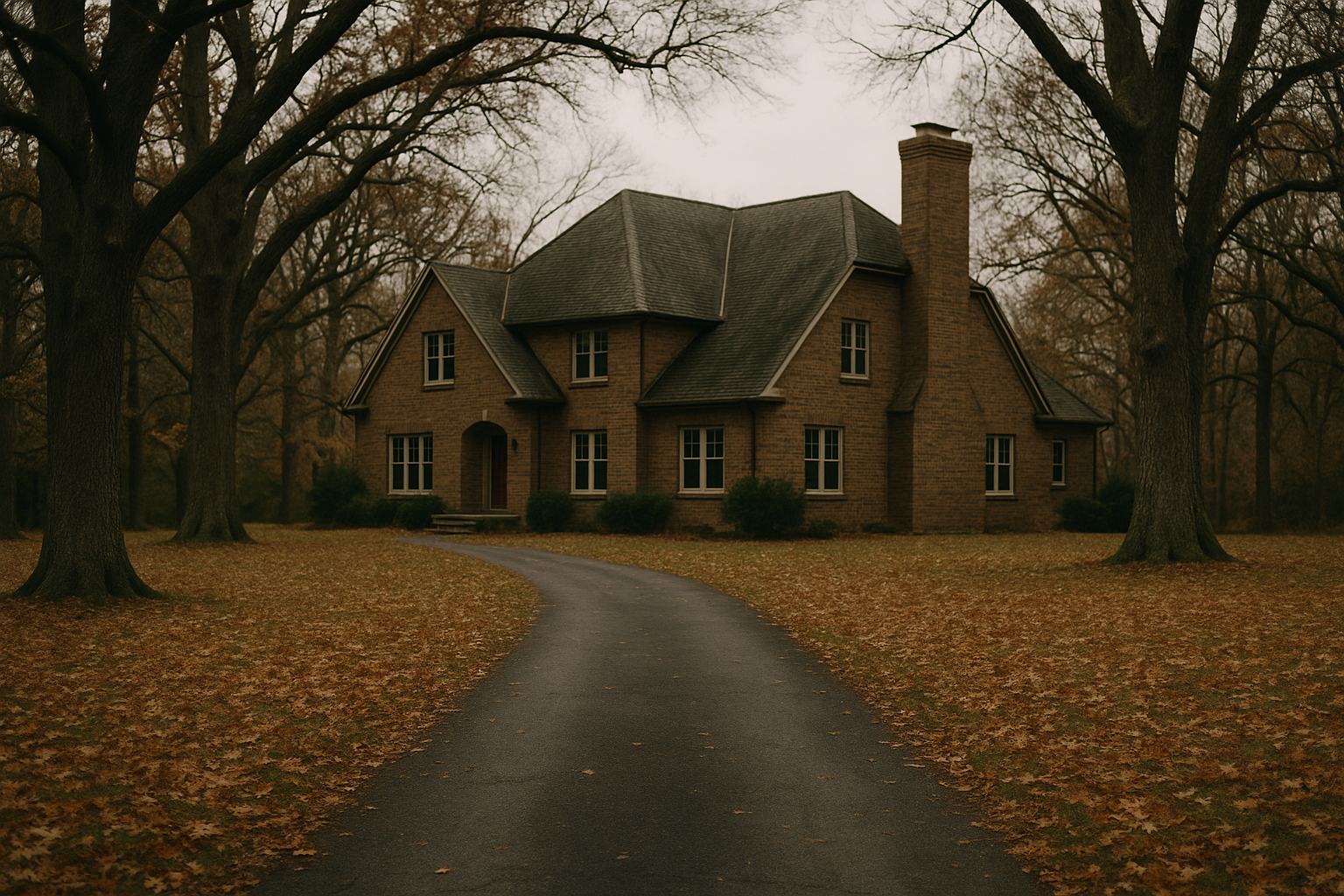
There is one request that settles most matching disputes before they start: ask to be shown the proposed material laid against the existing roof, outdoors, in daylight, before installation. Not a colour chip in a brochure and not a photograph on a phone. A bundle, on the roof or against the wall, in the same light the roof lives in.
A contractor who is confident about the match will do this without being asked twice. A contractor who is not confident will have reasons why it cannot be done today. That single test tells you more about how the rest of the job will go than any amount of discussion.
Keys installs Atlas and Malarkey, and will tell you plainly when a close match is a near match rather than an exact one. Where the honest answer is that a plane should be replaced rather than patched, that is the answer you will get, and the reasoning will be in the written scope described in what a written scope contains.
Elsewhere in this file
Article 02
What actually ages a roof hereFreeze and thaw working the same fastener in two directions across one year, and why the field of the roof is rarely what fails.
Article 03
Permits and the municipalityWhat St. Louis County requires, what a municipality can add on top of it, and the fact that Missouri issues no roofing licence at all.
Article 04
What a written scope containsFourteen things that belong on the page before anyone climbs a ladder, including the one number that always moves after the tear-off.
Article 05
Mature tree cover and the roofOak canopy is the reason to live here and it is also an abrasive, a dam, and a moisture trap. What it does and what it does not do.
Article 07
Gutters and drainage on a large houseThe undersized gutter is the classic failure on a big steep roof, and it is almost always a sizing decision, not a workmanship one.
Article 08
How to vet a roofing contractorThe questions that actually separate one bid from another, and the four sales behaviours that should end a conversation.
Article 09
Where a roofer is registeredThere is no roofing company with a registered address in Ladue. That fact is worth understanding rather than hiding.
Article 10
The storm record for this countyWhat the National Weather Service and NOAA actually logged, what those counts do and do not measure, and one Missouri tax credit that expires.
Article 11
The work, and how to start itRoofing, gutters and downspouts. What Keys does, what Keys does not do, and what happens after you call.